
Your first boxing class is a chance to learn the basics, not prove how hard you can hit. Most beginner sessions move through a warm-up, technique practice, simple drills, and a cool-down. You’ll learn how to stand, protect yourself, and throw basic punches before building speed or power. Coaches can adjust drills to your experience and fitness level, so you can focus on steady progress. Knowing what to expect can make walking through the gym door feel easier.
How Class Usually Flows
A class often starts with a brief check-in and warm-up. You might jog lightly, skip rope, move through bodyweight exercises, or practice footwork. The goal is to prepare your body and attention for training, not to exhaust you before the lesson begins. Tell the coach if you have an injury, health concern, or movement limitation before the session starts.
Next, the coach typically demonstrates a few fundamentals, such as stance, guard, and how to make a straight punch. You may practice in the air, on a bag, or with a partner, depending on the class format. Sessions often finish with conditioning and a cool-down. Ask whether the class includes partner drills or contact so you know what to expect.
Basic Gear to Bring
Wear comfortable workout clothes that let you move freely, along with supportive athletic shoes if the gym requires them. Bring water and a small towel. If you already own hand wraps or boxing gloves, ask the gym whether they’re suitable for class. Many beginner programs can lend or recommend equipment, so check before buying anything.
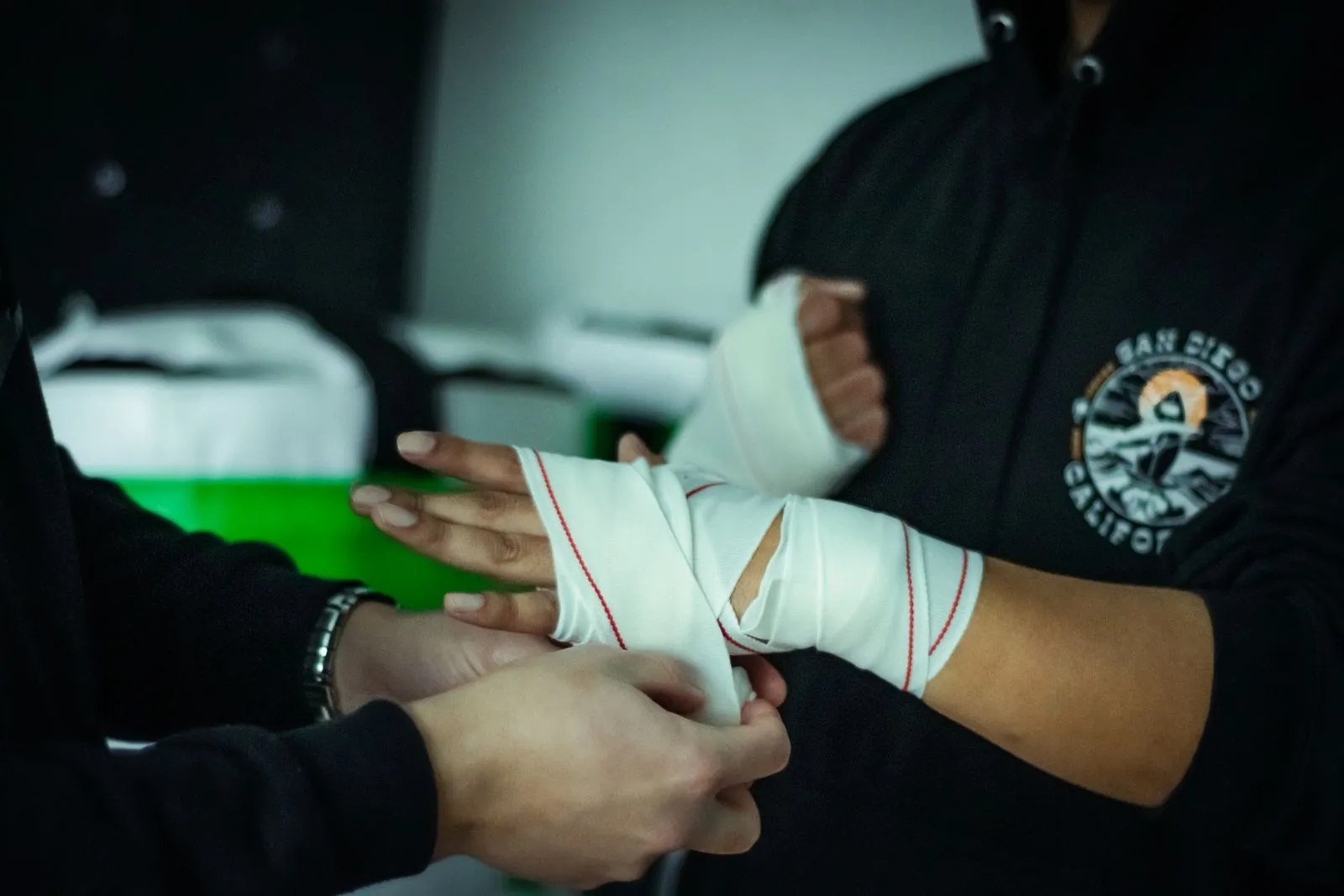
Hand wraps support the hands and wrists beneath boxing gloves. A coach can show you how to wrap them or point you to a clear demonstration. Gloves should fit securely without cutting off circulation. If you’re unsure what size or type to get, wait for guidance from the gym rather than choosing based only on appearance.
Learning at Your Pace
Good beginner coaching breaks movements into manageable steps. A coach may first help you find a balanced stance, then add one punch at a time. Expect corrections on details such as where your hands sit or how your feet move. These adjustments help you build safe, repeatable habits; they aren’t a sign that you’re falling behind.
You can take a water break, ask for a drill to be shown again, or choose a lower-intensity version when needed. Let the coach know if a movement feels painful, confusing, or too fast. Beginners don’t need to spar in their first class. A coach should explain the activity and make sure you understand the options before you take part.
Before You Head In
Arrive a little early so you can find the entrance, meet the coach, and ask where to put your belongings. Mention that it’s your first class and share any relevant experience, even if that experience is only a little fitness training. Follow the gym’s instructions about footwear, equipment, and where to wait before class begins.
After the session, note what felt comfortable and what you want to practice next time. Your arms or legs may feel tired from unfamiliar movements, but sharp pain is a reason to stop and tell the coach. Regular attendance helps the basic techniques become more familiar, while each class gives you another chance to ask questions and improve.
A first boxing class is structured practice: warm up, learn a few fundamentals, try controlled drills, and finish with a cool-down. Bring comfortable clothes and water, and ask about equipment before you buy it. Tell your coach what you need, then take each skill one step at a time. Contact Chattanooga Boxing Basics to ask about a beginner class and what to bring.